
Sub-Total: $0.00
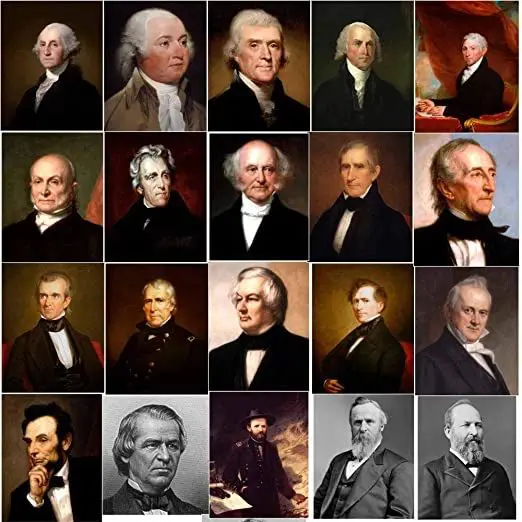
I have been waiting for almost 50 years to tell this story. It has been alive in the memory vault of my teaching life, waiting for the right time. And now is the time.
The scene is 5th grade, and me sitting in a hard wooden desk in my classroom at John Long Middle School in Grafton Wisconsin–a quiet town just 30 minutes north of Milwaukee. I was watching my teacher, Mrs. Sobcoviak, dutifully stapling portraits of past Presidents along the top border of the classroom walls. She had started behind her teachers’ desk, and was working her way around the room. One by one, in chronological order, the headshots of old white men went up. Their blank stares would be looking down on us for several weeks as we marched through a unit on U.S. History.
I don’t remember why I was the only kid in the room. Likely, I had committed some minor infraction and was being held inside from recess. But I rather liked being there with my teacher. Just the two of us. It was quiet, except for the faint yelling of kids on the playground outside. Mrs. Sobcoviak was wearing a short red skirt this day, and she kept tugging at it as she stepped up and down on her teacher’s chair to reach high enough to pin the posters. I stopped focusing on the worksheet in front of me, trying to guess who would be next. Washington, Adams, Jefferson, Madison, Monroe …
I was starting to get nervous, anticipating that we’d be tested on these men and expected to remember who was who, and in what order. They all looked alike.
The 6th guy in line was another Adams. What the heck? This was going to be impossible. The happy bubble of contentment I had been feeling moments before was slowly losing air.

I counted. One, two, three, four, five, six, seven … Okay, just 7 more to go until President Franklin Pierce. I knew his name, because it was my last name too. And he was the 14th President, which was just a skip away from the 16th President, Abraham Lincoln. A slight breeze of confidence puffed my bubble up again. I could handle this first part as long as I oriented the faces I knew to the ones I didn’t.
Jackson, Van Buren, Harrison … I followed my teacher’s progress as she repeated her pattern of pulling her heavy wooden teacher’s chair over a few feet, stepping up to staple two white men’s faces to the wall, and then stepping down again. She passed Lincoln, and I was losing my memorization streak. I anxiously waited for a face I recognized. That moment came about 10 faces later: Theodore Roosevelt! I could pick him out of a crowd, with his characteristic mustache and spectacles. My dad had a book at home with that same portrait on its cover.
The next face was Taft. Oh-oh. He and Roosevelt looked a lot alike. I studied their portraits in more detail, and made a mental note of the Taft’s mustache. His curled up a little at both ends, while Roosevelt’s went down. Fair enough. Then, the 29th President came along. He had the same last name as my gym teacher–Harding. That would be easy to remember. I liked Miss Harding a lot. Maybe a little too much. (Okay, I had a crush on her.) But that would help.
Up and down Mrs. Sobcoviak went, getting into a rhythm and picking up speed. She was no longer tugging at her skirt, seemingly as focused in her task as I was. Or maybe her arms were getting tired and she wanted to finish.
All of a sudden, there was splash of color.
Harry Truman’s pink face stood out in sharp contract to the 32 previous faces in various shades of black, white, and gray. The color would be a useful marker for my memorization. Pink + Truman. And then the home stretch: John Kennedy, Lynden B. Johnson, Richard Nixon. I was proud that I knew their first names as well.
Mrs. Sobcoviak, with no more posters in hand, snapped the stapler shut.
Just before she stepped down one last time, my eyes swept from Washington on the left of the room, all across the front and to the other side, where it ended with Richard Nixon.
Mrs. Sobcoviak, her back still towards me, stood still. Her shoulders suddenly slumped a little. She lowered the stapler and then she slowly turned to look at me and replied quietly, “But I don’t have any pictures of women.”
The stark truth of her words zipped through the room — a realization riding on an electric current that suddenly connected the two of us. The ghosts of all the women who made the history alongside those men, but whose faces we didn’t know.
Indeed: “Why are there no women?”
I could sense that my teacher just needed a suggestion. “How about Mrs. Martin Luther King?” I piped up with excitement. (You can see how outdated our social studies texts were: I didn’t even know that Mrs. Martin Luther King’s first name was Coretta, because she was always portrayed next to her husband and with the tagline “Mrs. King”.)
Now, Mrs. Sobcoviak was a great teacher. She was that perfect mix of strict, but kind; firm, but caring; intelligent, but open to the wonders that her own students experienced while reading or scribbling away on wide-ruled notepaper. She had a way of letting you know that you mattered, but she also didn’t hesitate to shoot a disapproving look if you stepped out of line. So, even though Mrs. Sobcoviak had a strict demeanor much of the time, she had a ray of kindness that I would do anything for, just to get a little of it to shine on me.
But the truth was out. She had no posters of women.
That moment between my teacher and me sparked a new-found interest in me learning everything I could about the Civil Rights Movement. I don’t know exactly why that topic. Maybe it was just the realization that I wanted to know who Mrs. Martin Luther King was. (She must have a first name, right? ) Mrs. Sobcoviak was smart enough to see that I was hooked and would not let go of the point we’d both stumbled upon.
Thus began the More-Women-Needed-On-the Wall Project.
There were women in our history, and I think my teacher wanted to find out about them too. Mrs. Martin Luther King was one of them, and there had to be more.
A whole new world opened up as Mrs. Sobcoviak let me go to the library after my work was done to find books about the Civil Rights Movement. And in those books I found more women’s names. Susan B. Anthony, Eleanor Roosevelt, Harriet Tubman, Shirley Chisholm.
She took me to the teacher’s workroom and showed me how to cut a huge piece of yellow butcher paper from a roll on the enormous rack on wheels, and then she helped me staple it on the wall to mark the place where I could display my research. She even finished it off with a border of thick red yarn. Mrs. Sobcoviak loved red.
As we marched through our history unit on white male Presidents, Lewis and Clark, and Manifest Destiny, my little drawings and hand-written reports offered a tiny window into a different story of our nation than what our textbooks were telling us. And chronological order didn’t matter.
Mrs. Sobcoviak then showed me how to use the mimeograph machine–the harbinger of the copy machine that had yet to find its way into schools. She showed me how to paint the gooey blue fluid onto the roller, and let me go through multiple pieces of carbon paper to create worksheets for my classmates to fill in as I presented information. One time, I even gave them a quiz. Suffice to say I didn’t have many friends after that. I was the weirdo who liked to learn. But it didn’t matter.
Under the guidance of Mrs. Sobcoviak, the teacher in me took flight.

I studied the heck out of the Civil Rights Movement, and continued to do so whenever I had a chance in high school. I even memorized King’s I Have a Dream speech for a high school performance.
(Can you imagine that, a young blond girl in pigtails, belting out: “Free at last, free at last, Thank God Almighty, we are free at last!” )
And then I went on to a teaching degree and then a Master’s Degree in Women’s Studies, so I could learn more about the women who have struggled and built up and blessed this nation. These were all of the unsung heroines I never saw in my textbooks.
I felt that same electric current zing through my body. Mrs. Sobcoviak’s face came racing into to my consciousness. She was smiling in her big red lipstick, and her eyes twinkled. We gave each other a silent high-five.
Even though Biden’s face looked a lot like the other old white men’s faces in my classroom way back in 1971, it was clear that the United States was finally realizing a new and hard-fought reality– the unmistakable slow and steady climb of women reaching the summit of the highest office in the land.
Because, along with Biden, was Kamala Harris, bringing a refreshing demeanor, and a new color along the wall of faces that future students would be seeing when studying U.S. History.
I thought that Hillary Clinton might be the first one to break that progression, but not yet. Women everywhere had to stand firm and sing the Gospel song,
Hold on just a little while longer
Hold on a little while longer
Hold on
Just a little while longer
Everything is gonna be alright A little while longer …
And MAN — er… WOman — what a wait we’ve had!
George Washington was sworn into office on April 30, 1789. That was 231 years ago. And we still don’t have a woman at the top. Kamala Harris dialed us into the possibility, though, and she started to paint a new progression of faces on our wall. Just this morning, I saw a picture posted online that showed the 48 previous Vice Presidents — all men, all white.
Kamala just busted that run, and consciously highlighted all of the women who had also busted through equally difficult barriers, making it possible for her to stand on that stage in Wilmington, Delaware.
“To the woman most responsible for my presence here today,” Kamala said to a cheering crown during her first speech as the Vice President-Elect, ” — my mother, Shyamala Gopalan Harris, who is always in our hearts. When she came here from India at the age of 19, maybe she didn’t quite imagine this moment. But she believed so deeply in an America where a moment like this is possible. So, I’m thinking about her and about the generations of women — Black Women. Asian, White, Latina, and Native American women throughout our nation’s history who have paved the way for this moment tonight.”
Kamala continued.
“Women who fought and sacrificed so much for equality, liberty, and justice for all, including the Black women, who are too often overlooked, but so often prove that they are the backbone of our democracy. All the women who worked to secure and protect the right to vote for over a century: 100 years ago with the 19th Amendment, 55 years ago with the Voting Rights Act, and now, in 2020, with a new generation of women in our country who cast their ballots and continued the fight for their fundamental right to vote and be heard.
“Tonight, I reflect on their struggle, their determination and the strength of their vision — to see what can be unburdened by what has been — I stand on their shoulders.”
As she said these words, my eyes welled up with tears. These were the words my young heart heard so many years ago, but didn’t yet have the history to say.
Kamala dug deeper. “And what a testament it is to Joe’s character, that he had the audacity to break one of the most substantial barriers that exists in our country and select a woman as his vice president.”

A young white girl living in the countryside of Wisconsin, dreaming of what could be — not just for me — but for ALL women, and especially women of color whose lives and determination have shaped our nation into what it is still aspiring to be. I wanted it for Coretta Scott King, who seemed to be always in the shadows.
SO NOW WHAT?
We are all asking that question.
No matter where you stand on the results of this 2020 election, we might all agree that our nation has felt rather aimless these past 4 years in particular — adrift at sea with no rudder. Now, the rudder has been found and is being reattached, making it possible for the people of this amazing country to get back to the hard work of facing the challenges of the Coronavirus so we can overtake it and get ourselves open for business again. And that will pave the way for refashioning our health care system, re-energizing our schools, rebuilding roads and highways, becoming better stewards of the planet, and re-establishing ties with nations around the world.
I know that an almost equal-millions of people did NOT vote for Joe Biden and Kamala Harris, but I believe in the power of each of us calling a truce on divisiveness, one person at a time, and listening hard to those who now feel even more disenfranchised.
I did what any sensible person with a laptop does these days: I typed “John Long Middle School” in my search browser, located the phone number, and simply called the front office.
“Hello,” I began. “This was a long time ago, back in the early 1970s, but I wonder if you can help me locate a teacher I had back then — Mrs. Sobcoviak?” I suddenly realized that — like “Mrs. Martin Luther King” so many years ago — I didn’t even know my dear teacher’s first name.
“Oh, you mean Rita?” the surprised woman’s voice chippered back. “Sure, she comes to school every week or two to visit.”
Could it really be that easy to reach my teacher, after all of these years?
I have to say that I didn’t even stop to think if my teacher was still alive. I mean, from a kid’s point of view, she had to have been at least 40 when I was in school. She had lines around her eyes and had almost-white hair. That was “old” to a kid. I tried to do the math. If she was 40 in 1971, that would make her (counting on fingers) about 86 or so at the time of my call. Yes, she could still be alive, and apparently was.
The patient school secretary listened as I explained the reason for wanting to reach Mrs. Sobcoviak —
- How she had been my teacher in 5th and 6th grades
- How she taught me to call a “bubbler” a water fountain when my family was preparing to move West to Colorado during the summer of 1972, and how “pop” would probably be called “soda”.
- And how she let me do research, taught me how to run the mimeograph machine, and present my reports to the class.
I told her the story about the Presidents’ Portraits along the wall, and how I had gone through three degrees in education because of that, and was now directing a teacher education program myself in Washington State.
I don’t really know what the secretary was thinking about my firehose of memories, but — as I was telling it — the realization came through loud and clear:
One teacher can change a life. On that one “Presidential Poster Day,” and in her short red skirt and red lipstick, Mrs. Sobcoviak set me on a trajectory that I am still living out to this day.
“My goodness, that’s quite the tale!” the school secretary finally got in a word. But she was being honest. Stunned, really, that I would remember all of those experiences from such a long time ago. “I think Rita would love to hear from you. I don’t think she does email, but I can tell her you called the next time I see her. What’s your number?”
Two weeks later, my cell phone rang. A number with “Thiensville, Wisconsin” lit up the screen. My heart skipped a beat. Thiensville was a neighboring village close to Grafton. Only one person in the world could be calling me from there.
And just like that, Mrs. Sobcoviak’ s voice was on the phone, and I was retelling the same story, albeit it at a slower pace. “I just wanted you to know how much you influenced my life,” I offered. “You were an amazing teacher.”
“Well, thank you,” Mrs. Sobcoviak replied simply. “It’s so nice for you to reach me, but I honestly don’t remember any of that.”
I was momentarily hurt that I hadn’t made a bigger impression on my teacher, but then realized that she had likely worked a 40-year teaching career, or more. That’s a lot of kids.
“Doesn’t matter,” I laughed. “The important thing is you made a huge impact, and I want you to know how grateful I am.”
“Well. Okay. Thank you. Bye now.” Mrs. Sobcoviak hung up. Her response to my emotional outpouring was typical Midwestern: matter-of-fact and humble — a quality of “you bet, sure, anytime, don’t think anything of it.”

Mrs. Sobcoviak died on October 21, 2016. I learned of her passing almost four years later, on October 10, 2020. I know that was the day, because it was 3:50am the following morning when I posted a shorter version of this story on the Schramka Funeral Home page. I wanted her family to know how much she meant to me. Other people had posted already, of course. “Beautiful lady.” “Happy Memories.” “Wonderful teacher.”
You see, I was up late and reading about Kamala Harris, whom Joe Biden had tapped as his running mate a couple of months prior. I don’t know what prompted me to do an online search for Rita Sobcoviak. I mean, the woman didn’t even use email. What made me think I would find a digital footprint of her anywhere?
And then I saw the word “Obituary” next to her name. I felt a door in my heart close slightly. Of course, she was “getting up there,” I mused.
But the door didn’t close all the way. It was like my dear teacher had decided to take a rest in the guest room, but wanted to be accessible if someone needed her. So she left the door slightly ajar. I looked at the date of her passing and noticed her date of birth: 1942. That meant I was only about a decade off in my calculations of her age when she was my teacher. Born in 1942 meant she was about 29 years old when we crossed paths.
And then it dawned on me that she and I had spoken on the phone very close to when she died. And I am so glad we did.
Before finishing up, I urge you to reach out to the teachers in your life who have made a big impression on you, like Mrs. Sobcoviak did with me. Sharing your gratitude goes a long way towards making the world a better place. Your kind words cheer people up and give them hope. Or a memory once lost, found again.
Because of Mrs. Sobcoviak’s encouragement, I truly appreciate this moment in our nation’s history when we can say: YES — FINALLY!
Women are coming out of the shadows. They have their own first names. And there are more women in leadership positions in our nation than ever before. They come from within and beyond our shores, and from all walks of life:
Hillary Clinton, Elizabeth Warren, Stacey Abrams, Amy Klobuchar, Gretchen Whitmer, “The Squad”– Representatives Ilhan Omar of Minnesota, Alexandria Ocasio-Cortez of New York, Rashida Tlaib of Michigan and Ayanna Pressley of Massachusetts. And the 2020 election just added two Native American women in the House of Representatives: Deb Haaland, a Laguna Pueblo from New Mexico and Sharice Davids, a member of the Ho-Chunk Nation from Kansas. They are the first Native American women to serve in Congress.
And, now, Kamala Harris.
If Mrs. Sobcoviak were teaching today, I’m sure she’d be adding these women, and more, to her social studies quizzes. She might even include Danica Roem, the first transgender woman to serve in Congress (from Virginia’s 13th District).
So my story that began in 1971 continues for me as it does for all men, women, and transgender people who ache to see more diversity in places where it matters so much — where decisions that affect all of us are forged, hammered out, tried, and hammered again.
There is so much to heal, now, and re-create together. I am heartened by the increasingly diverse sea of faces I see in government. It’s a signal for us to NOT expect Joe Biden and Kamala Harris to fix everything that ails us.
Each of us needs to lean in, putting our collective shoulders up to the Wheel of Progress and turning it one step at a time. Sometimes, we take turns. And I firmly believe it’s time for the women to take it for more than just a few turns. We need to take a serious spin cross-country.
Our journey will be continually challenged, but there is also much joy to have along the way.
I leave you with this poem by Clarissa Pinkola Estes, poet and author of Women Who Run With the Wolves. Print it and frame it for guidance when times get tough. For there have surely been hard times, and will be again.
“… My friends, do not lose heart. We were made for these times …”