Sub-Total: $0.00
MUSINGS WHILE WRITING MY SOON-TO-BE-PUBLISHED MEMOIR, “TEACHING IN THE DARK”
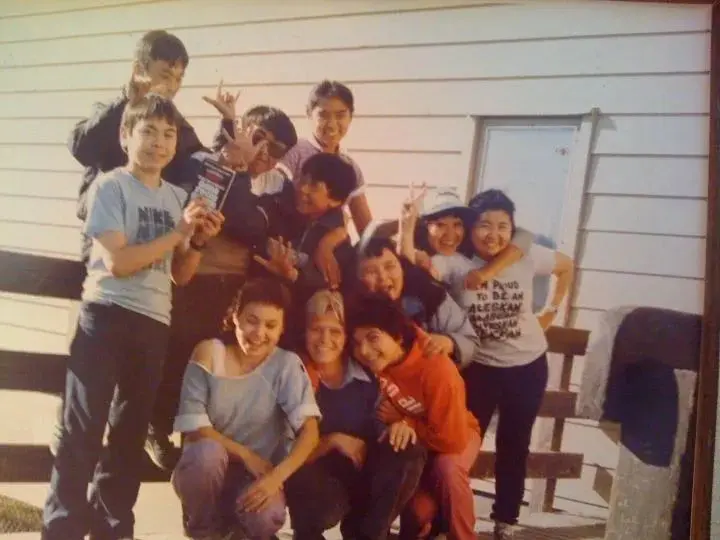
(That’s me, front and center, the only blonde …)
Hardly a day goes by that I don’t think about my first year as a high school teacher in the small Inuit village of Shishmaref, Alaska. The vast land and sea, and the generous people who greeted me, stand in stark contrast to the self-doubt that hounded me almost every day, and the overwhelming disappointment I felt as the year dragged on.
My tenure in the village was short, but those months made an indelible impression on my heart and in my mind. A decade later, when I found teacher education as a professional path forward, I started putting together the pieces of what had gone so wrong that first year of teaching. I also started to understand what had gone so right.
The lessons of Shishmaref were so powerful that, decades later, I am still realizing that the hardships I endured—the ones that seemed to drive me away from teaching—were actually the things that have enabled me to come back to teaching high school once more. I am eternally grateful to have a second chance.
Parker Palmer wrote, “We teach who we are,” and I certainly did teach who I was my first year: well-intentioned but ignorant, friendly but frustrated, brave but scared. In many ways, I was actually teaching who I wasn’t, spending an inordinate amount of energy trying to figure out what to teach (meaning the content) and how to make it make sense to students who lived in a subsistence culture, a million miles away from my own lived experiences in the Midwest and Colorado. I mean, whose idea was it that 9th graders needed to read Shakespeare? And what the heck was “Consumer Math” in a subsistence culture?
None of the courses I took at my university prepared me for what was to come. There were no classes to help me sort through who I was as a young person or identify the gifts I could bring to teaching while simultaneously leveraging weaknesses that drove my students crazy. There were no classes to help me reconcile my insecurities, balancing those with the requirement to “control” a group of kids whose culture was so vastly different from my own.
All of the lesson planning, assessment strategies, and classroom management approaches I had experienced throughout my own education were based on an Industrial factory-model type of schooling. It was schooling for the purpose of developing content knowledge, not cultivating healthy relationships with others and, in particular, a healthy relationship with myself. So many of my days were filled with confusion about how to work with teenagers, and trying to make what I was supposed to teach make sense in their world.
The result? I ended up defaulting to what I thought I was supposed to be like as a new teacher and imposing the standards with which I was most familiar—those of a White person raised in the dominant culture and ruled by a Protestant work-ethic. And then I measured my students’ success, or the lack thereof, against those standards. Of course, the Inuit People have their own work ethic, one that has kept them alive and thriving for thousands of years in one of the most challenging environments on the planet. But my culture had been making quite a mess of theirs. We were an inevitable mismatch.
You’ll be happy to know that my students eventually broke me out of my ill-advised mindset. They were a tenacious and patient bunch.
When we reflect on our years in school and our favorite teachers, we remember the ones who related to us in ways that made us feel “seen”. We don’t usually remember much of what they were teaching, but we remember the teachers who guided us into becoming better versions of ourselves.
So, how do you become that teacher?
In retrospect, I think I finally understand that what I learned in Shishmaref answered that question, and has been subtly guiding the trajectory of my teaching career for over thirty years. And the lessons are not mine alone. They are universal lessons that appear in cycles of seasons—those on earth, those in teaching, and those within ourselves. They are lessons of courage that my students taught me, over and over again.
One thing I’ve learned is this:
Your emotional life is never done as a teacher. You are constantly learning new things — or ought to be — you are constantly faced with new situations and being transformed from the inside out — one student at a time. If you are no longer emotionally engaged, then it’s time to retire. The kids need you emotionally. If you don’t feel it — go see your students in a different context. Switch grade levels or schools. Lean into what comes next. Let your students lead you. Set things up the best you can, and then get out of their way.
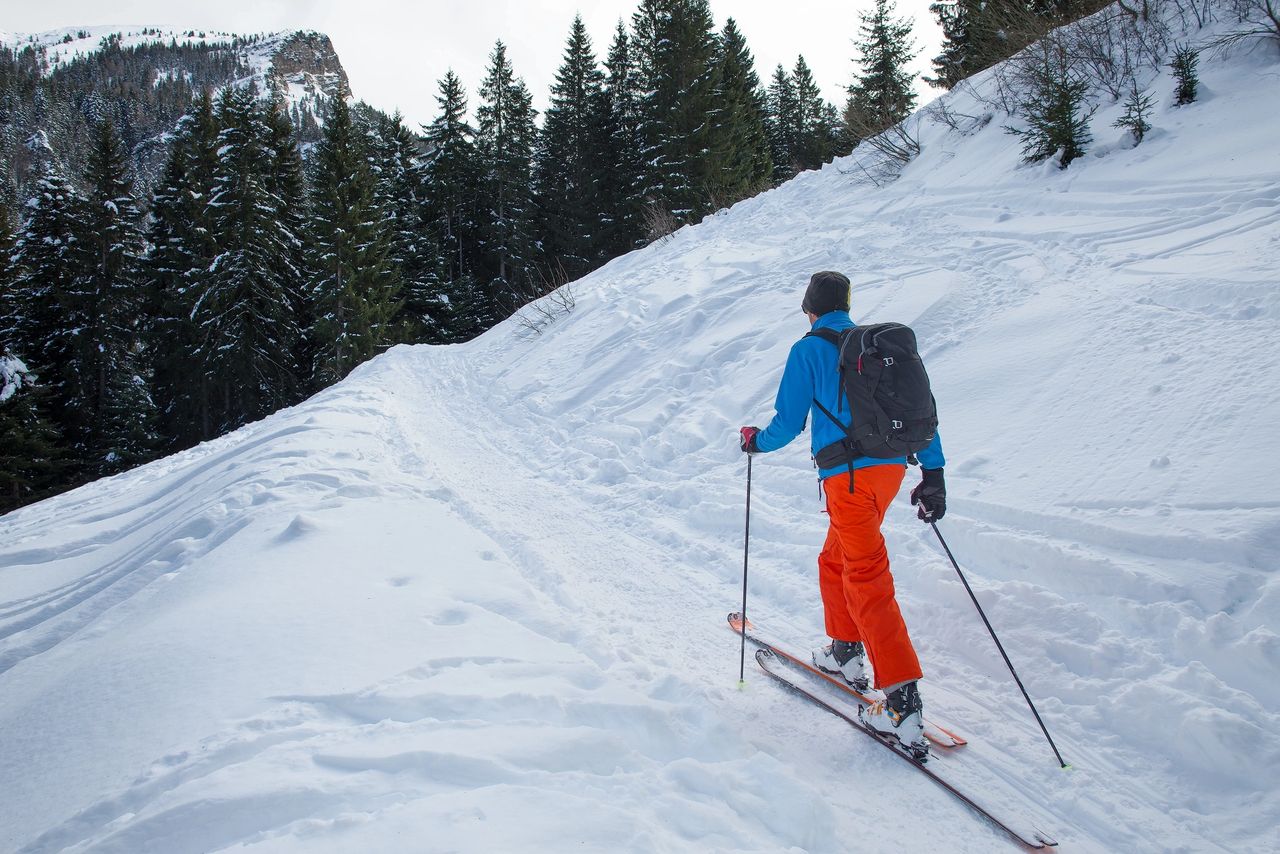
In the waning months of winter during my first year in Shishmaref, I was more or less volunteered to coach a middle-school cross-country ski team. There were five kids, none of whom had ever skied before. Our goal was to prepare for a competition in another village. I had only four weeks to teach them how to put on their skis, how to take them off, how to “ski skate” without killing themselves, and how to turn and stop. It was nuts. And fun. And funny.
My team of five skiers called themselves The Five Musketeers, a name that perfectly captured their spunk, tenacity, and resiliency in winter conditions that would make even a hardened Olympian shiver in her boots. In a way, that group and the rest of my forty-some high school students were “Musketeers,” swashbuckling their way through adverse circumstances, fighting for justice, and having a lot of fun along the way.
My memoir is dedicated to ALL my students, past, present, future — but especially to my Musketeers. Their enthusiasm kept me going, and — forty years later — still makes me smile.
For news on my book’s release date, and to receive inspiration and other cool things about “teaching from the inside-out,” please fill out my contact form here:
https://genetsimone.com/contact
As I say to my students, young and old, see you in the halls!